Endoscopic Spine Surgery: Is It Better Than Open Spine Surgery?
Back pain and spine-related problems can significantly affect everyday life. While many patients improve with medicines, physiotherapy, and lifestyle changes, some conditions may eventually require surgery.
Traditionally, spine surgery has involved relatively larger incisions and greater exposure of the affected area. Today, endoscopic spine surgery offers a minimally invasive alternative for carefully selected patients.
But does minimally invasive mean better? And is endoscopic spine surgery suitable for everyone?
Let us understand the difference.
What Is Endoscopic Spine Surgery?
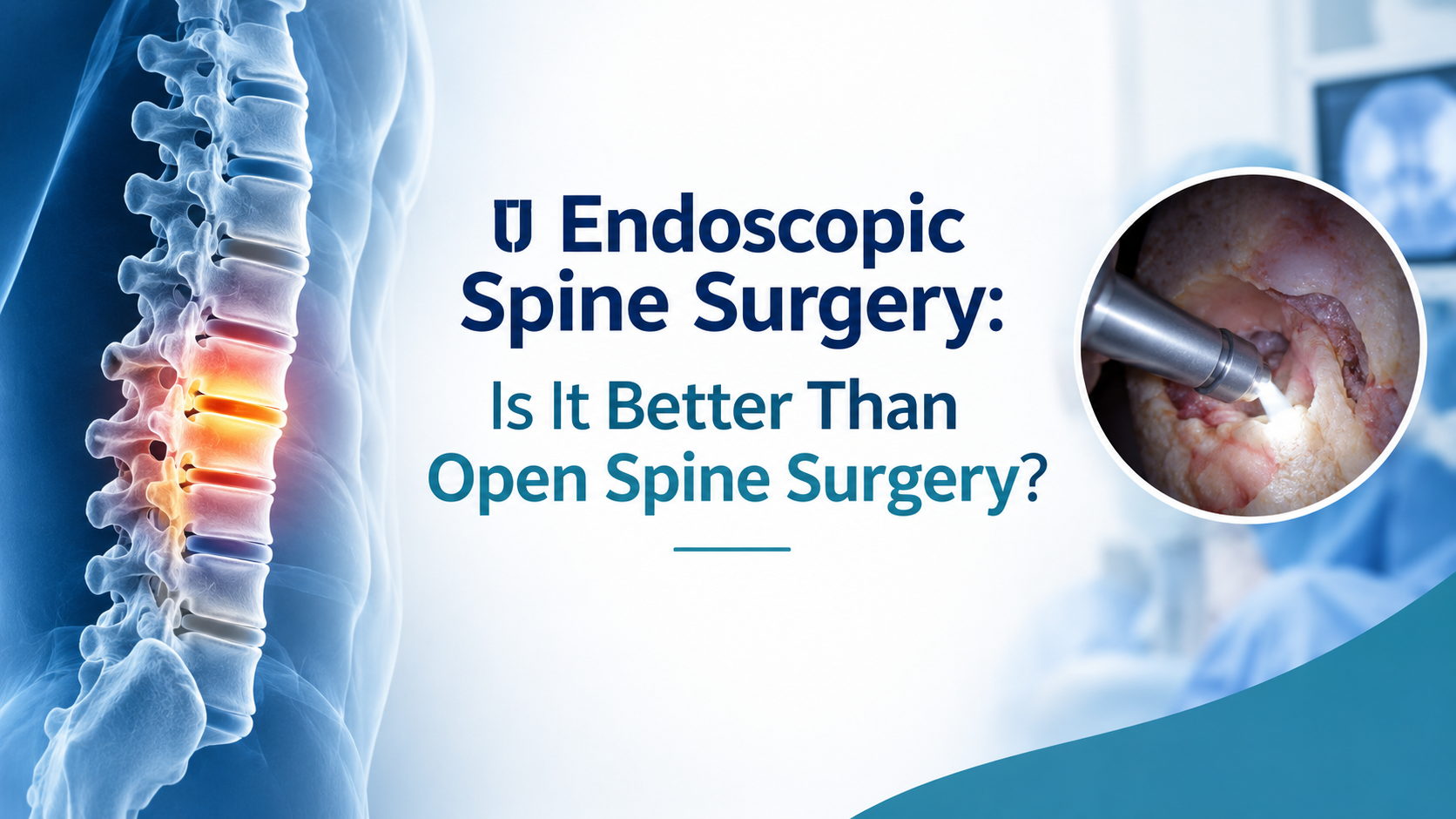
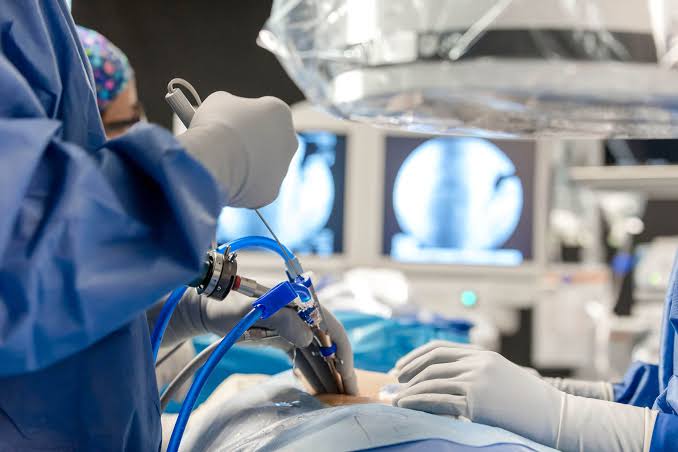
Endoscopic spine surgery is a minimally invasive surgical technique in which a small camera, called an endoscope, is inserted through a small incision to reach the affected part of the spine.
The surgeon uses specialised instruments alongside the endoscope to treat problems such as certain slipped or herniated discs, nerve compression, and spinal stenosis.
Unlike conventional open surgery, the approach generally involves less disruption to the surrounding muscles and tissues.
How Is It Different From Open Spine Surgery?
In traditional open spine surgery, the surgeon may need a larger incision and greater exposure of the spinal structures to access the affected area.
Endoscopic procedures use a much smaller access point and specialised equipment to visualise the surgical field.
The exact technique depends on the patient’s diagnosis, the location of the problem, the severity of nerve compression, spinal stability, and other individual factors.
Potential Benefits of Endoscopic Spine Surgery
For appropriately selected patients, endoscopic spine surgery may offer several advantages:
1. Smaller Incision
Because the procedure is performed through a small access point, the incision is generally much smaller than that used in many conventional procedures.
2. Less Muscle and Tissue Disruption
The approach can reduce damage to the muscles and soft tissues surrounding the spine, which may contribute to a smoother recovery.
3. Less Postoperative Discomfort
Some patients experience less postoperative pain compared with more extensive open procedures, although individual recovery varies.
4. Faster Recovery
Depending on the procedure and the patient’s overall health, recovery and return to normal activities may be quicker.
5. Shorter Hospital Stay
Certain endoscopic spine procedures can be performed with a relatively short hospital stay, and some may even be performed as day-care procedures in appropriately selected cases.
Is Endoscopic Spine Surgery Always Better?
No.
This is an important point.
Endoscopic spine surgery is not automatically better than open spine surgery. The goal of spine surgery is to treat the underlying problem safely and effectively—not simply to use the smallest possible incision.
Some patients may benefit greatly from an endoscopic approach, while others may require a conventional or different minimally invasive procedure.
For example, complex spinal deformities, significant spinal instability, certain tumours, extensive compression, or conditions requiring spinal fusion may not be suitable for an endoscopic procedure alone.
Who May Be a Candidate?
The decision depends on several factors, including:
- The exact spinal condition
- Location and severity of nerve compression
- MRI and other imaging findings
- Symptoms and neurological examination
- Spinal stability
- Previous spine surgeries
- Overall health and medical history
A detailed evaluation by a spine specialist is therefore essential before deciding on surgery.
Does Every Disc Problem Need Surgery?
Not at all.
Many cases of back pain, sciatica, and disc-related symptoms improve with conservative treatment such as medication, physiotherapy, activity modification, and other non-surgical measures.
Surgery is generally considered when symptoms persist despite appropriate treatment, neurological problems develop, or there is significant nerve compression requiring surgical intervention.
The Right Surgery Depends on the Patient
There is no single “best” spine surgery for every patient.
The most appropriate procedure is the one that safely addresses the underlying condition while preserving as much normal tissue and spinal function as possible.
If you have persistent back pain, leg pain, numbness, weakness, or symptoms suggesting nerve compression, a proper neurological and spinal evaluation can help determine whether surgery is necessary—and, if it is, which approach is most appropriate.
Final Takeaway
Endoscopic spine surgery can provide the benefits of a minimally invasive approach for carefully selected patients, but it is not a universal replacement for open spine surgery.
The decision should be based on the patient’s condition, imaging, symptoms, neurological findings, and overall health.
If you are experiencing persistent back or leg symptoms, consult a qualified neurosurgeon or spine specialist for an individualised assessment rather than choosing a surgical technique based solely on the size of the incision.
Dr. Sabhyasachi Saha provides evaluation and surgical management for a range of neurological and spine conditions, with treatment tailored to each patient’s individual needs.